Fluent in humans.
Wizzly helps children become the kind of communicators people want to listen to — and the kind of listeners people learn to trust.
Through interactive voice adventures, children practise the human skills that shape real relationships: finding the right words, building a richer vocabulary, telling stories people want to hear, listening with curiosity, reading emotions and understanding what isn’t always said out loud.
They practise the moments that matter: how to comfort a friend, speak up with confidence, disagree without pushing someone away, make others feel heard, and build trust through what they say and do.
Natural to learn young. Much harder to learn at forty.
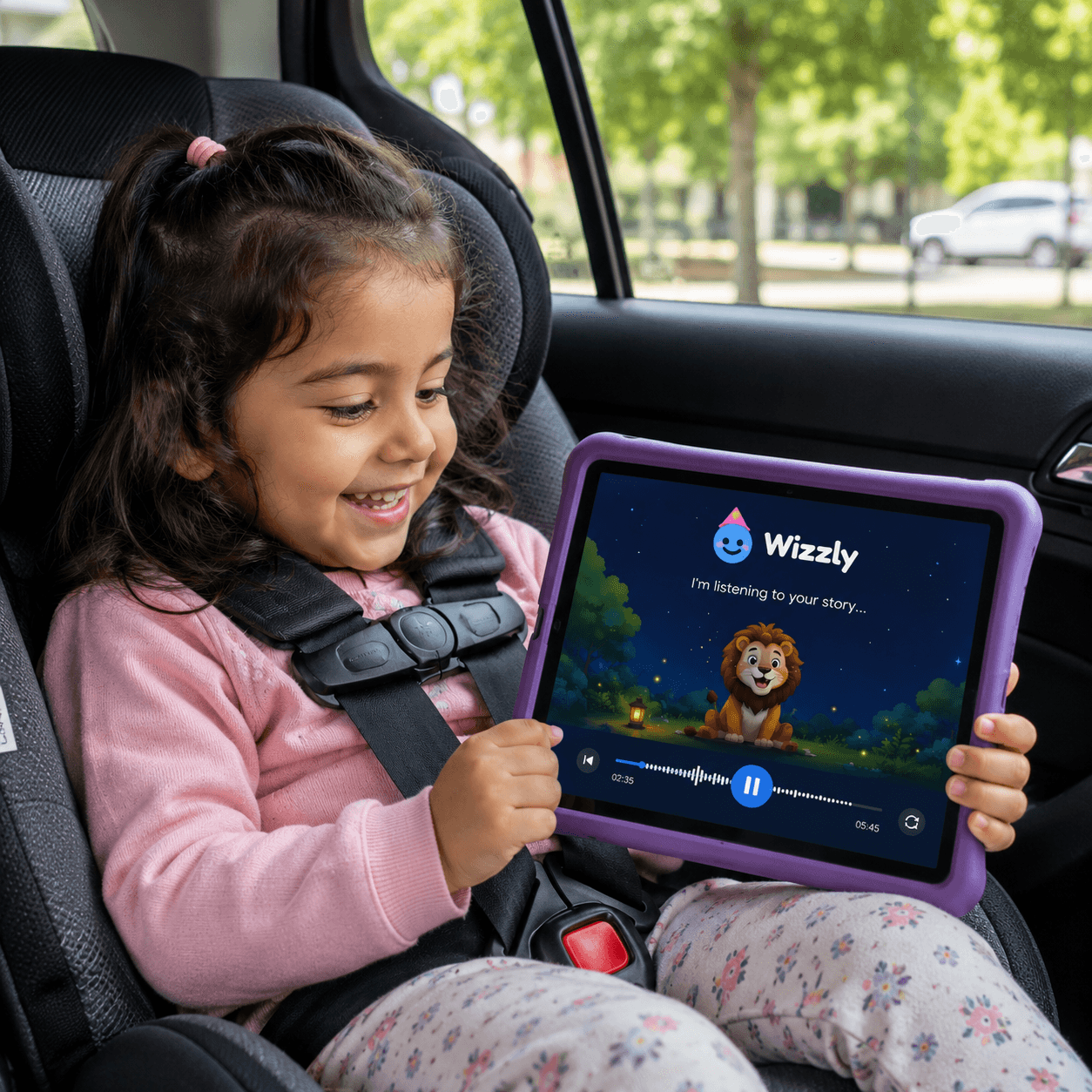
Wizzly is a voice-based AI companion that teaches children aged 4 and up conversation, emotional intelligence and social skills through interactive audio stories.
Children talk with Wizzly rather than watch it, so the screen is optional — the phone can sit face-down. It is built specifically for children: one fixed character with hard content boundaries, not a general chatbot. No ads, and free during early access.
- Ages
- 4 and up, in three tiers
- Format
- Audio-first. Screen optional, no feed.
- Platform
- Runs in any browser for quick access. Mobile apps for a better experience.
- Price
- Free during early access
This is what a Wizzly conversation feels like.
No buttons, no multiple choice. Your child speaks, and the story listens back.
Every adventure runs the same loop — and the mission is the part that does the work.
Critical learning parked for later — the thing that decides everything.
Communication and emotional skills are the strongest predictors of how a child gets on with other people, and almost nowhere in a school timetable is responsible for teaching them. Most of us picked them up late, by getting them wrong in front of people who deserved better.
Schools teach math. Apps teach coding. Tutors teach grammar. But nobody teaches your daughter what to say when her best friend stops talking to her. Nobody teaches your son how to disagree without making an enemy. Nobody teaches them how to hear what people mean, not just what they say.
We were all supposed to just pick it up. Some of us did — at 30. Some of us never did.
Meanwhile, the world flipped. AI now solves technical problems in seconds. The advantage left to our children is everything a machine can't be — the person everyone trusts, the one who finds the right words when it matters, the one who reads the silence. That's not talent. That's a language. And children absorb languages effortlessly — if someone speaks it to them early enough.
What does “fluent in humans” actually mean?
Human fluency is the set of skills that decide how a child gets on with other people: speaking clearly, listening deeply, telling stories worth hearing, reading how someone feels, finding precise words, and building trust. Wizzly is built around those six, not around a single vague idea of confidence.
Speak clearly
Organise a thought, then turn it into words another person can actually follow.
Listen deeply
Pay attention instead of waiting for a turn. Remember the details. Ask the follow-up.
Tell great stories
Start with something interesting, keep it in order, add the detail that matters, hold attention.
Understand people
Move from "what did they say?" to "what might they be feeling?" — tone, hesitation, the unsaid.
Find the right words
Not "bad" and "nice", but disappointed, left out, relieved, hilarious. Precision, met in context.
Build trust
Honesty, keeping a promise, owning a mistake, a real apology, disagreeing without wrecking things.

Curiosity today. Confidence tomorrow.
A slightly ridiculous wizard with a very serious job.
Wizzly is the wizard character children talk to inside the Wizzly app — a small, floppy-eared wizard in a blue pointed hat who tells interactive audio stories and listens back. Wizzly is a fictional AI character, not a real person, and is the same character in every adventure.
Wizzly teaches through interactive stories rather than lessons. Each story carries one hidden objective — a feeling to name, a social situation to navigate, words met in context. The child talks with a wizard, decides what happens next, and never hears about the objective.
Wizzly is a voice — warm, funny, endlessly curious — who tells your child stories and, unlike any audiobook, listens back. Your child talks, asks, interrupts, decides what happens next. Wizzly responds in real time, in the same voice, in the same story, every time.
No lessons. No quizzes. No "today we learned about empathy." If your child can tell they're being taught, we've failed. They'll just think they have a hilarious wizard friend. You'll know better. 😉
Every feeling has a name. Wizzly teaches it in the moment it happens.
Wizzly reacts the way a person does — curious, surprised, delighted, proud. Children learn emotional vocabulary by meeting feelings in context, on someone else’s face and in a moment that called for them, rather than from a poster on a classroom wall.
Not a poster of faces to memorise — a friend whose face your child learns to read while a story is going on.
 HappyWhere every adventure starts.
 CuriousThe question that keeps a story going.
 ExcitedWhen your child’s idea turns out to be the good one.
 SurprisedThe twist nobody saw coming. Including Wizzly.
 ThinkingA pause is allowed. Wizzly waits through it.
 LaughingSilly enough that it never feels like a lesson.
 WinkingThe little joke the two of them are in on.
 CheekyMischief, safely inside a story.
 SleepyWind-down stories, for the end of the day.
 ProudThe face at the end of a mission they talked their way through.
Your child will copy all ten — the words first, then the noticing. That is what emotional vocabulary looks like before anyone calls it that.
A story is only the beginning.
Every Wizzly adventure runs the same six-step loop: discover an idea, live it inside a story, talk it through, then take on a mission where Pip faces the same problem and your child has to decide what to say. Afterwards they reflect on what worked, and celebrate.
Discover
Wizzly and your child open up an idea together — what it means when someone goes quiet, why an apology can land badly.
Story
They live the idea inside an adventure, where a character runs straight into it. Nobody explains the lesson.
Talk about it
Wizzly asks real questions and waits. Your child has to put the idea into their own words — out loud.
Mission
Pip hits the same problem, and now it is on your child. What do they say? What do they ask? How do they help?
Reflect
They look back at what worked and what they would try differently. This is where the learning becomes theirs.
Celebrate
The adventure ends properly, with a win worth having. Children come back for the part that feels good.
They don't just hear the idea. They have to use it.
Watch their human skills grow.
The parent dashboard is available today. It shows what your child practised in each adventure, how they responded during missions, and which themes and skills are coming up again and again — without you needing to sit beside every conversation.
Wizzly will increasingly use your child’s previous adventures and progress to choose and adapt what comes next.
The conversations children don’t learn from worksheets.
Wizzly gives children somewhere safe to practise those moments before they happen for real.
Someone people want to listen to. And someone people want to talk to.
Confidence alone just makes a louder child. The goal is connection, which needs both halves.
Worth listening to
People listen when someone has something to say and can actually say it. Your child practises starting somewhere interesting, keeping events in order, choosing the detail that lands, carrying emotion, and noticing when a listener has drifted.
Worth talking to
The strongest communicator is often not the one talking most — it is the one who makes everyone else feel interesting. "What happened next?" "How did you feel?" "What do you think we should do?" Noticing, remembering, responding.
✨ Give them more words for their world
A child with more precise language has more ways to explain what they think and feel. The words arrive inside a conversation that needed them, not on a flashcard.
Like what you see? Play with Wizzly right now — free in your browser. 🚀
Try Wizzly Free →Native apps are on the way — until then, both badges take you straight to the web app.
One friend, from first words to big questions
Built for ages 4 and up — different content and a different approach for every stage.
Wizzly is built in three tiers, because a four-year-old and a thirteen-year-old need different things. Ages 4–6 covers naming feelings and turn-taking. Ages 7–10 covers friendship conflict. Ages 11–15 covers subtext, persuasion and identity.
🌤️ The Wonder Years
Short, cozy stories. Big feelings with simple names. Gentle turn-taking that builds the very first conversation muscles.
- Naming feelings — happy, sad, angry, scared, frustrated
- Turn-taking in a conversation, and waiting for an answer
- Simple apologies, and what makes one real
- Asking for help instead of melting down
- Sharing, and handling it when the answer is no
🧑🤝🧑 The Social Years
Friendship dilemmas, playground politics, first real conflicts. Stories mirror the moments your child is actually living.
- Friendship conflict — falling out, and finding the way back
- Disagreeing without escalating
- Reading tone: when "fine" does not mean fine
- Giving and taking feedback without it stinging
- Playground negotiation and group dynamics
🧠 The Depth Years
Sarcasm, subtext, identity, persuasion, the hard questions. Wizzly meets tweens and teens as an equal — and starts sparring, kindly.
- Sarcasm and subtext — what people mean versus what they say
- Persuasion, and arguing a case honestly
- Identity, and talking about who you are becoming
- Setting and holding boundaries
- Hard conversations that cannot be avoided
Wizzly doesn't just get harder. He changes how he relates — because a 4-year-old and a 14-year-old don't need a different difficulty level, they need a different friend.
Six ways we build real skills
Wizzly combines interactive stories, real spoken conversation practice, role play that reinforces each skill, and a parent dashboard showing which skills are developing. Everything is voice-first and ad-free, funded by parent subscriptions rather than advertising.
📚 Stories
Interactive tales that build vocabulary and comprehension one page at a time.
💬 Conversation Practice
Real back-and-forth dialogue to build confidence speaking and listening.
📈 Progress Tracking
Parents see exactly how communication skills grow, week by week.
🧩 Role Play
Playful role play that reinforces every lesson without feeling like homework.
🌍 Multiple Languages
Coming soonThe same social and language skills, taught across languages kids actually speak at home.
🎯 Personalized Growth Engine
Coming soonEvery story and game adapts to your child's progress report — reinforcing weak areas, stretching their strengths, and flagging parents the moment extra attention is needed.
What you get today, and what is still coming.
- Interactive voice conversations
- Stories, missions, reflection and celebration
- Progress tracking
- The full parent dashboard
- Ages 4–6 — The Wonder Years
- English
- Personalised Growth Engine
- Ages 7–10 — The Social Years
- Ages 11–15 — The Depth Years
- Additional languages
- Native app-store versions
Because conversation can’t be learned by watching.
Children learn to communicate by communicating. They learn storytelling by telling stories, empathy by trying to understand someone, confidence by finding words when they are unsure, and listening by actually listening. That is why Wizzly talks with children instead of at them.
The screen supports the experience. The conversation drives it.
What you may start noticing at home.
No app can promise a change in a child. These are the things parents tell us they begin to see.

Built differently, because children are different.
Built by a parent, and guarded like one. Here is what that means concretely — specific behaviour, not adjectives.
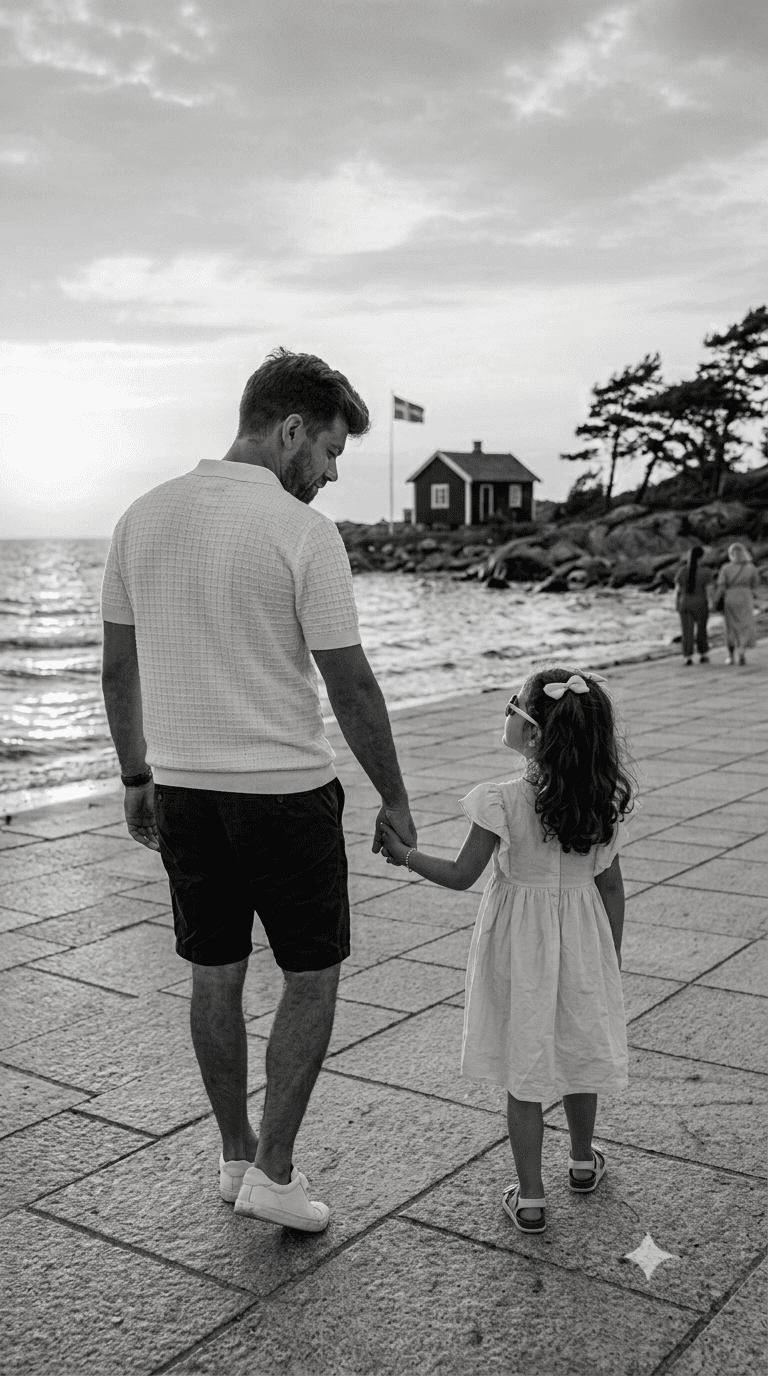
"I learned it at 36. She'll have it at 6."
During an evening walk with my daughter (3.5 years old), we came across a little boy having a massive meltdown—screaming at the top of his lungs and hitting his parents. My daughter watched quietly, taking it all in, and then looked up at me.
"Dada, I love you. I will not hurt you, but tell me what I do when I get mad?"
I completely froze. At 36, I didn't have a good answer. I used to think communication meant being able to speak well. It took me far longer to realise it was much bigger than that — knowing how to explain an idea so someone actually understands it, how to tell a story people want to hear, how to listen without waiting for your turn, how to notice when someone isn't saying what they really feel, how to disagree without making an enemy, how to find the right words when a conversation gets hard.
And I am still learning it. Picking these up at 36 is slow, awkward work — at six, they would have come free.
That is where the thinking started. I have a full-time job through the day, and my evenings belong to my daughter. So Wizzly got built at night, after everyone in the house was asleep — hours I did not really have, with no coding background to fall back on, learning each piece as I needed it. One mission kept it going: my daughter must be exceptional at the human part of life. There are already excellent tools for letters, numbers and school subjects, and she will use plenty of them. Wizzly is for the other half.
I didn't build this for a market. I built it because my daughter asked me a question I owed her an answer to. If you are a parent navigating these same moments, you are welcome to use it.
From our early access families
"She used to melt down every time she lost a game. After a few weeks with Wizzly she said "it's okay, I'll try again" — and actually meant it."
"He's started asking Wizzly follow-up questions like it's a real friend — and using the same words with us at dinner."
"The bedtime fight disappeared. Now she asks for "one more Wizzly story" instead of one more show."
Questions parents actually ask
Free for early birds
Wizzly is completely free during early access — every story, no card required.
Wizzly is early, and the families using it now are genuinely shaping what it becomes. That is worth more to us right now than their subscription.

Wizzly is live! 🎊
No waitlist, no downloads needed — Wizzly runs right in your browser. Start playing in seconds.
Try Wizzly Free →Native apps are on the way — until then, both badges take you straight to the web app.